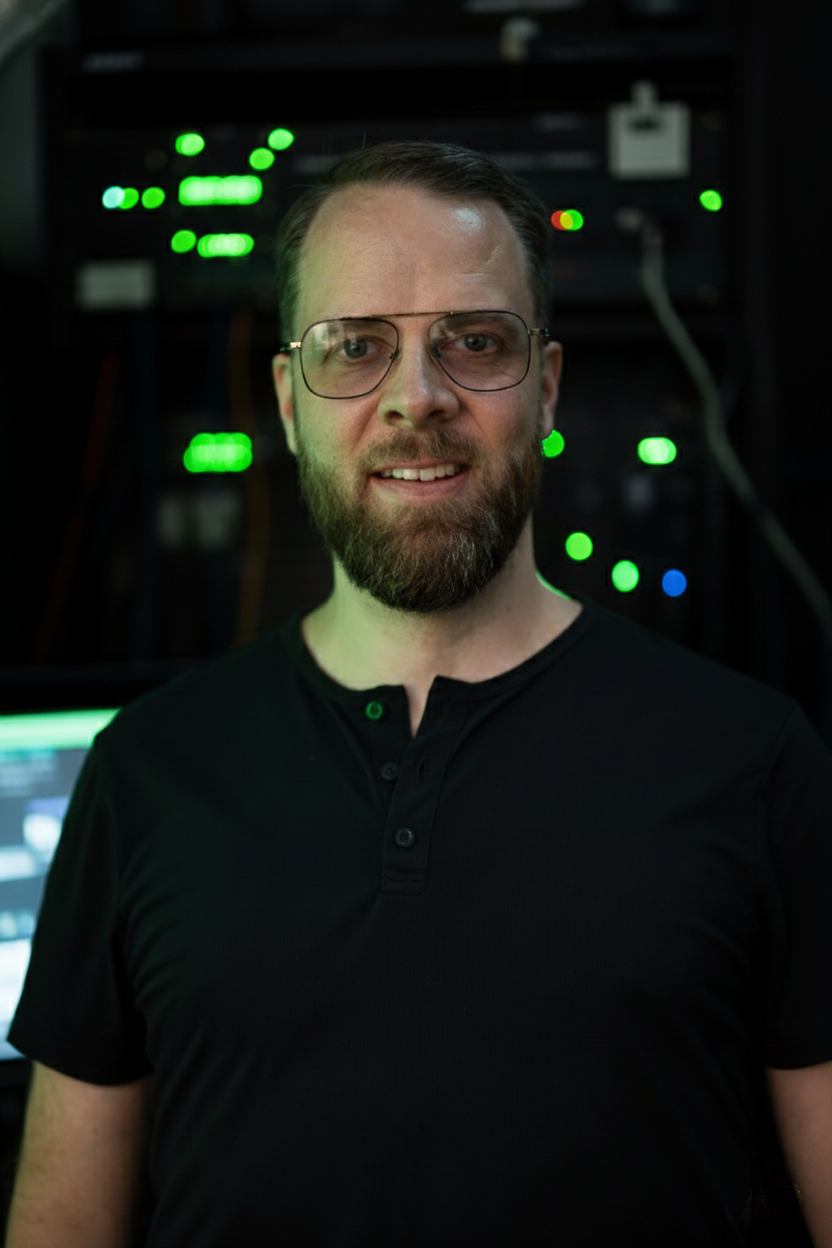
THE LINEAGE
- 2005 – PRESENT
Broadcast television, technical direction
- JAN 2025
Turned that discipline on AI: products, agent systems, infrastructure
- NOW
Building systems for people who need something that does not exist yet
The short version of the first twenty years: live television, where you learn systems, workflows and logic, and where you learn to work with a very wide range of people. Production, engineers, networking, maintenance. Everybody has a different job and a different vocabulary and the show still has to go to air.
In early 2025 I turned that on AI, and I've built something nearly every day since: products, agent systems, developer infrastructure, creative tools, experiments of my own. Some worked. Plenty of them showed me exactly where they fell over. The accumulation is the skill.
The work now is the same job in a different room. Define the system, decide what the machine's allowed to do on its own, direct the agents and tools that build it, look hard at what comes back, and keep pushing until the thing is real enough to argue with.
That's the part that carries over. I've spent the last two decades helping engineering, coding, networking and production teams pull in the same direction through big technology shifts, SD to HD and then the move to IP and 2110. Putting agents into a company that already has a way of working is the same shape of problem: a lot of departments, one new technology, and somebody who has to keep them all moving towards the same thing.